Tuesday, April 26, 2022

Ukraine and Russia, a New War


Rockport History Book Club

Ukraine and Russia: A New War

History Book Club

Wednesday, April 27, 2022


Southern Ukraine, Crimea and the Don Basin

Wednesday, April 27, 2022. History of Ukraine and the Dnieper and Don Rivers. "Believe me, you will acquire immortal fame such as no other sovereign of Russia ever had," said Grigoriy Potemkin, a prominent adviser to Catherine the Great, when offering the empress counsel in 1780 on plans to wrest Crimea away from Ottoman suzerainty. "This glory will open the way to still further and greater glory." Events in 2022 cast a spotlight on Russia and Ukraine. Read any book that explores the rich history of this fertile land north of the Black Sea and south of Russia. [Proposed by Mary Beth Smith]

Paul D’Anieri, Ukraine and Russia: From Civilized Divorce to Uncivil War; Cambridge UK: Cambridge University Press, 2019. 282 pp.


Bucha, Ukraine, by D. Berehulak, NY Times

            To start to understand why Vladimir Putin waded into the invasion of Ukraine on Feb. 24, 2022, and brought forth worldwide reaction, financial damage to his nation, a picture of cruelty and heartlessness like Stalin’s, and a demonstration of what appears to be a hollowed-out, second-rate military, let us look at what happened when the Soviet Union quietly fell apart without bloodshed in 1991.

            All during the Cold War there had been a sort of balance of power: NATO vs. Warsaw Pact; Communist vs. Capitalist; Arab nations, generally sponsored by the USSR and PRC, vs. Israel and Western Nations. When the Soviet Union imploded in 1991 most of us who had spent the Cold War studying Russia were amazed at how the end came so quietly, and bloodlessly.

            Then in 1999 Poland joined NATO, and in the next few years more former Soviet bloc nations joined.  Fiona Hill of our National Intelligence Council at the time recently wrote that in 2008 she advised President George W. Bush not to let Ukraine and Georgia join because it would make Russia feel like a caged lion.  He went ahead and supported the move anyway, even though other NATO member leaders warned against it, and Russia openly objected.

            American and European motivation to let nations join NATO and the European Union was simple: “The more the merrier!” But as Fiona Hill advised, it created the situation of unbearable pressure against the wounded, rebuilding Russia. And those Russians, Vladimir Putin in particular, looked back upon the vast Russian Empire of the Tsars, the great Soviet Union, and saw these bit-by-bit events intolerable. 

            In 2008 Putin sent troops to invade Georgia, with scant reaction from America or European nations.

            And, in 2014 Putin quietly seized the Crimean peninsula and attempted to take the Don Basin states of Luhansk and Donetsk, both largely populated with Russian-speaking and oriented Ukrainians. 

            In 2014 Ukraine was governed by a Russia-friendly leader with a government known for widespread corruption. 

            The Soviet Union I knew years before, when I lived there in 1981-83 was riddled with corruption, and that is why the end came so swiftly for the USSR. The men who had bored deeply into segments of the Soviet economy began to grab huge chunks and convert them into dollars.  It was a feeding frenzy, and greedy little men from all over the world came to help pick over the spoils. 

            It does not take a lot of imagination to discover that a man like Donald Trump would somehow, someday, connect himself to this extravaganza of loose money.  With people like Paul Manafort, and then Rudy Giuliani and his Russian allies, it was a nice fit. It’s sad that even Joe Biden’s son found his way into this money-grubbing feast. 

            All this time, the corruption extended to all the former Soviet republics, including Ukraine, with most leaders closely tied to Russia.

            When Putin sent men in unmarked uniforms into Crimea in 2014, the takeover was swift and quiet.  The United States, with President Obama, and European Leaders expressed disapproval, but it became a fait accompli. Russian invasion of the Donbas drew more ire, and plunged part of Ukraine into a drawn-out local war, even resulting in shooting down of a passing jetliner with loss of 298.

            And then, Volodymyr Zelenskyy, a Jewish comedian, was elected president. Ukraine appeared to be pulling itself out of the corruption cesspool.

            America’s undivided attention fell upon Ukraine when President Trump was impeached for allegedly trying to blackmail the new Ukrainian President. He was accused of threatening to withhold $491 million in Javelin anti-tank missiles that Congress had authorized for Ukraine, unless Zelenskyy announced he was investigating corruption by President Biden’s son.


-end-


2022


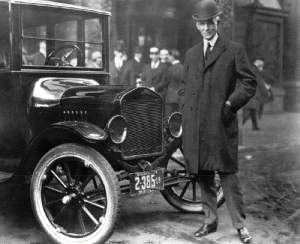
Henry Ford

 Wednesday, May 25, 2022. Immigrants to America who have made a difference. Read and tell us the story of an immigrant to the U.S. who has brought a wondrous addition to his/her new nation. Perhaps the newcomers started a family of creative Americans; perhaps they themselves made important advances. Look at Henry Ford, Albert Einstein, Sergey Brin, Audrey Hepburn, Chinua Achebe, Cary Grant, Irving Berlin, Nikola Tesla, more. [Proposed by Mary Beth Smith.]


Lincoln Assassination

Wednesday, June 29, 2022. Assassinations and executions of leaders. Read the stories of how famous people were assassinated and what came after. From modern times--- Anwar Sadat, Olaf Palme, Yitzhak Rabin, Aldo Moro, Mahatma Gandhi, Indira Gandhi, or Presidents Lincoln, Garfield, McKinley, and Kennedy, or Franz Ferdinand, King of Albania, Nicholas II of Russia, or earlier-- Henry VI, James III, Henry III, Julius Caesar. [Proposed by Janos Posfai]


Ironclad USS Monitor, 1862

Wednesday, July 27, 2022. Game changing maritime inventions. Read about the days of ships propelled by sail, oars, coal or oil, paddle wheelers, steam engines, or warships like dreadnought, submarines, aircraft carriers, or torpedoes, propellers, chronometers, sextants, etc. [Proposed by Janos Posfai]


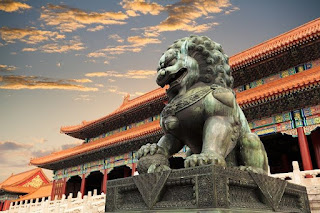
Wednesday, August 31, 2022.   How Should We Deal with China?  Let's dig into the history of China and try to learn how the United States should approach China, in terms of human rights, trade policy, Taiwan, Hong Kong, Global Warming, Nuclear Weapon Proliferation, autonomous weapons, public health, and much more.  We are tremendously interdependent: should we continue to view China as an Opponent? [Proposed by Bruce Frederick]

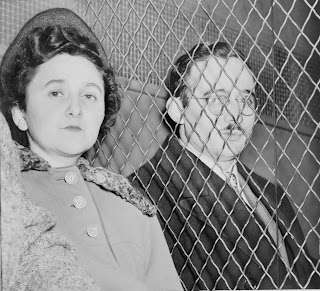
Ethel and Julius Rosenberg

Wednesday, September 28, 2022. Trials of historical significance. Read about the Nuremberg War Crimes Trials (1945-46), or the Trial of Julius and Ethel Rosenberg (1951), Burning of the Reichstag trial (1933), or the Trial of Galileo Galilei (1633), Martin Luther and the Diet of Worms, (1521) (not what it sounds like), the Trial and Death of Socrates by Plato (399 BC), or many more. [Proposed by Janos Posfai]


Tuesday, March 29, 2022

America in Reconstruction after the Civil War


Rockport History Book Club

America in Reconstruction

after the Civil War

History Book Club

Wednesday, March 30, 2022


Wednesday, March 30, 2022.  Reconstruction, 1865-77 Abraham Lincoln had a clear picture of what should be done after the end of the War Between the States, but his assassination meant that Andrew Johnson, the Democrat who succeeded him, would be President. Read about this dangerous, murderous time in our history as we sought to regain the 11 Confederate States in the Union.  Read about the growth of white supremacist organizations, and the different ways that America handled the end of slavery, and welcoming (?) millions of newly freed Africans to America.  [Proposed by Mary Beth Smith]


A Dangerous Stir: Fear, Paranoia and the Making of Reconstruction;


Mark Wahlgren Summers, A Dangerous Stir: Fear, Paranoia and the Making of Reconstruction; Chapel Hill, NC: University of North Carolina Press, 2009., New York: Random House; 2019


Heather Cox Richardson, The Death of Reconstruction: Race, Labor and Politics in the Post-Civil War North, 1965-1901 (2001)


            America has just gone through a war, south vs. north, with 620,000 dead. The end of the war meant freedom for nearly four million slaves, but then what?         

             Studying Reconstruction after the Civil War is important to help us understand the story of America, which began by using fellow human beings as slaves. 

             a.  How to include four million new citizens in the life of the country?

            b. How to incorporate the seceded states back into the Union?

             c.  How to create a new Union, mending the animosities, fears, bringing poor and rich, white and black, northerner and southerner together?

             Author Summers goes to great effort to describe the fear and discord in America leading up to the Civil War, showing the confusing array of Copperheads, Doughfaces, Know-Nothings, Whigs, Douglas Democrats, Abolitionists, Southern Democrats and Republicans.            

            Fear ruled the country, and a careful, skillful minority of slaveholders set the stage for secession, so that when it finally happened, in state after state, the majority of whites, mostly not slaveholders, were caught up in the frenzy, with tales of rampaging slaves and invading Northerners.

            Shortly after the November 1860 election of Abraham Lincoln, came the rumors of angry mobs breaking into New York banks, and seizing the ports of New York and Brooklyn, and the Governor of Virginia leading a “rakehelly” mob over the Potomac into Washington. Actual secession of southern states, after all the rumors, was out in the open, for all to see.

            People today are uncertain about the invasion by Russia in Ukraine and the possibility that it might grow into world war, scientific indicators of global warming, inflation, the remaining threat of a pandemic, and the widening gap of one political party seemingly bonded to a past president and still not accepting the election of the President by the other party.  The party not in power today is systematically changing the balloting and vote management mechanism systems in states where they are in the majority, in hopes that they can win back their majority.  We are still recovering from a violent attack of the nation’s Capitol by mobs which included many who were openly in white supremacist organizations. It is depressing to consider how many Americans still do not consider Blacks as entitled to equal rights.

Rutherford B. Hayes 1877-81

            As we look back at the process of Reconstruction, which was abruptly stopped after the negotiated electoral victory of Rutherford B. Hayes in 1876, what if it would have been continued until its goal was accomplished?

            The 1860 election brought secession, Fort Sumter and war.  The 1864 election, taking place as the Union saw its way to victory, pitted Lincoln and his Democrat vice presidential candidate Andrew Johnson against former Union General George McClellan, a War Democrat, and George Pendleton. Lincoln won handily, becoming the first president to be reelected since Andrew Jackson in 1832.    

            Lincoln was assassinated less than two months into his second term, and less than a week after General Robert E. Lee surrendered the Confederate army at Appomattox Court House.  Lincoln was succeeded by Andrew Johnson, who then had to deal with Reconstruction.  

            After the war, there were continual reports and warnings of rampaging Negro mobs all over the defeated South.  The press did much to spread rumors and created continual turmoil. It is a testimony to the times that most reports of rabid, bloodthirsty, heavily armed blacks marching on white towns and wreaking havoc ended with scores of blacks killed and perhaps one or two whites wounded.          

            If you’ve followed the national discourse these days you might appreciate the perceptions Americans in 1867 gained, each subject to enormous alteration, depending on whether you were a poor white Southerner, a former plantation owner, a newly freed African-American, a northern Radical Republican, a northern Copperhead, War Democrat or Peace Democrat, or a Lincoln Republican.

            Many northerners understood that it was in the country’s best interest that the former Confederacy was given generous treatment.

            Andrew Johnson was impeached by Congress in a process that began in February 1868 with 11 articles, the most important was a charge of violating the Tenure of Office Act. He was acquitted on that charge and two others, then the Senate dismissed the remaining eight articles without trial. After it was over, it looked so ludicrous, so hollow and cheap. Years later, commentators were still writing: “There has rarely been a more amusing episode…nor a better illustration of the way an incident of really trifling importance can be worked up by the effects of unscrupulous politicians, supported by unscrupulous newspapers, so as to wear the look of irretrievable disaster.” Nation, 1875.

            The national election of 1868 was between Republican Ulysses S. Grant and Democrat Horatio Seymour. Texas, Virginia and Mississippi had not yet re-entered the Union, so their votes were not counted. This was the first election for newly freed slaves. Grant won overwhelmingly.

            Although Democrats continually feared that he would try to become an Emperor, his was a rather slipshod, bungling, ham-handed and corrupt administration for eight years. 

The three major amendments that were passed shortly after the Civil War are the reconstruction amendments that were the 13th, 14th, and 15th amendments.

 The Thirteenth Amendment abolished slavery within the United States and its territories. It reads: 'Neither slavery nor involuntary servitude, except as a punishment for crime whereof the party shall have been duly convicted, shall exist within the United States, or any place subject to their jurisdiction.' The exception that allows servitude as punishment for a crime allows prisons to use inmate labor. It was ratified on December 6,1865.

 Fourteenth: All persons born or naturalized in the United States, and subject to the jurisdiction thereof, are citizens of the United States and of the state wherein they reside. No state shall make or enforce any law which shall abridge the privileges or immunities of citizens of the United States; nor shall any state deprive any person of life, liberty, or property, without due process of law; nor deny to any person within its jurisdiction the equal protection of the laws. It was ratified on February 3, 1870

 Fifteenth: The Fifteenth Amendment to the United States Constitution prohibits the federal government and each state from denying a citizen the right to vote based on that citizen's "race, color, or previous condition of servitude." It was ratified on February 3, 1870, as the third and last of the Reconstruction Amendments. It was ratified on July 28,1868.

             Reconstruction was an experiment, and it stirred up hatreds that had been created long before the Civil War, and created new suspicions and fears, mostly in the South. This was the time that the Ku Klux Klan and several other similar organizations got their start, and they were responsible for many lynchings and much terror in the South. Probably many terrorist killings were carried out by angry whites without any organizational affiliation.  

            Being born in East Texas 69 years after the war, I grew up in the segregated South. As a child I remember lots of talk about black people and the need to “keep them down.”  When I was a teenager, I heard of classmates who would go “nigger knocking”. A car full of drunk white boys would drive through the black part of town and, when they passed a Black walking by, they’d whack him with a 2x4.

            Governors in some states organized to wipe out Klan-like raids and killings. In Texas a Southern Unionist, Edmund J. Davis, who had been a Union general in the war, was elected as a “Reconstruction Governor” and served one term, 1870-74. He organized the state police and arrested suspects by the thousands.  The Klan in Texas never recovered. [Although now a particularly violent group in Vidor TX shows up in the news occasionally.]  Texas today still has a lot of racism.

            The Reconstruction was poorly done, because of the vengeance of Radical Republicans; ignorance of many; built-in tendency toward racial hatred; a poorly informed electorate; media often eager to twist the reporting of news in their direction; greed; and incompetence on many levels of leadership.

            A Black man was elected President of the United States in 2008 and governed for eight years.  His two terms were seen by many to be honorable and positive.

            What many Americans did not see was that millions of our fellow Americans seemed to despise the very idea of a Black man as president.  Their latent feelings were activated by a man who knew just the right words to provoke resentment, fear and suspicion.

            That man rode to victory on a tide of negative thoughts and fears, and openly played to white supremacists.

            For four years America had a president who openly encouraged a following that thrived upon white supremacy, suspicion, fear and hatred of outsiders, particularly non-whites, and would-be immigrants from Latin America and Muslims.

             “Reconstruction” is still a work in progress.


-end-

                                                                             2022


Ukraine in 8th to 13 centuries. (Washington Post)

Wednesday, April 27, 2022. History of Ukraine and the Dnieper and Don Rivers. "Believe me, you will acquire immortal fame such as no other sovereign of Russia ever had," said Grigoriy Potemkin, a prominent adviser to Catherine the Great, when offering the empress counsel in 1780 on plans to wrest Crimea away from Ottoman suzerainty. "This glory will open the way to still further and greater glory." Events in 2022 cast a spotlight on Russia and Ukraine. Read any book that explores the rich history of this fertile land north of the Black Sea and south of Russia. [Proposed by Mary Beth Smith]


Henry Ford

 Wednesday, May 25, 2022. Immigrants to America who have made a difference. Read and tell us the story of an immigrant to the U.S. who has brought a wondrous addition to his/her new nation. Perhaps the newcomers started a family of creative Americans; perhaps they themselves made important advances. Look at Henry Ford, Albert Einstein, Sergey Brin, Audrey Hepburn, Chinua Achebe, Cary Grant, Irving Berlin, Nikola Tesla, more. [Proposed by Mary Beth Smith.]


Lincoln Assassination

Wednesday, June 29, 2022. Assassinations and executions of leaders. Read the stories of how famous people were assassinated and what came after. From modern times--- Anwar Sadat, Olaf Palme, Yitzhak Rabin, Aldo Moro, Mahatma Gandhi, Indira Gandhi, or Presidents Lincoln, Garfield, McKinley, and Kennedy, or Franz Ferdinand, King of Albania, Nicholas II of Russia, or earlier-- Henry VI, James III, Henry III, Julius Caesar. [Proposed by Janos Posfai]


Ironclad USS Monitor, 1862

Wednesday, July 27, 2022. Game changing maritime inventions. Read about the days of ships propelled by sail, oars, coal or oil, paddle wheelers, steam engines, or warships like dreadnought, submarines, aircraft carriers, or torpedoes, propellers, chronometers, sextants, etc. [Proposed by Janos Posfai]


Wednesday, August 31, 2022.   How Should We Deal with China?  Let's dig into the history of China and try to learn how the United States should approach China, in terms of human rights, trade policy, Taiwan, Hong Kong, Global Warming, Nuclear Weapon Proliferation, autonomous weapons, public health, and much more.  We are tremendously interdependent: should we continue to view China as an Opponent? [Proposed by Bruce Frederick]


Ethel and Julius Rosenberg

Wednesday, September 28, 2022. Trials of historical significance. Read about the Nuremberg War Crimes Trials (1945-46), or the Trial of Julius and Ethel Rosenberg (1951), Burning of the Reichstag trial (1933), or the Trial of Galileo Galilei (1633), Martin Luther and the Diet of Worms, (1521) (not what it sounds like), the Trial and Death of Socrates by Plato (399 BC), or many more. [Proposed by Janos Posfai]


Thursday, February 24, 2022

History of South America


Rockport History Book Club

History of South America

Wednesday, February 23, 2022


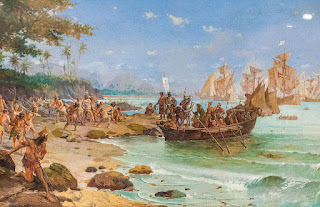
Landing of Pedro Cabral in future Brazil, 1500. Painting by Oscar da Silva, 1922.

Wednesday, February 23, 2022. History of South America. South America has a rich history, from Incas and other indigenous peoples to colonization by Spanish, Portuguese, and other European nations, onward to monarchy in Argentina, slavery, and struggling democracies. It’s the history of Machu Pichu, exploration and exploitation of the Amazon, Simon Bolivar, Pedro Cabral, Juan Peron, Hugo Chavez, Augusto Pinochet, The Falklands War, Shining Path.  Select any period, any nation or group, and let us learn together. [Proposed by Sam Coulbourn]


Schwarcz, Lilia M. and Starling, Heloisa M., Brazil: A Biography, unabridged, translated from the Portuguese, New York: Picador: Farrar, Status & Giroux. 2018, 761 pp.

            These two women scholars have done a marvelous job of telling the story of Brazil.

            The Portuguese started covering the globe early in the 15th century, along with the Spanish.  All of Europe was straining to expand trade, looking for new markets, and trying to break the stranglehold the Venetians held over access to the Far East. When Christopher Columbus, sailing in a ship financed by Spain, discovered a whole new continent, the race was on. 

            Pedro Alvares Cabral discovered the coast of what is now Brazil in 1500. Others were discovering treasures all around the African continent as far as China and Japan. All the explorers wanted the quick riches of gold and silver, but for Brazil, the path to riches began with growing sugar cane, planted, harvested and processed by African slaves and native Brazilian Indians made slaves.

            Sugar had been produced in India as far back at 500 BC, a delicacy available only to kings, but now, thanks to slave labor all Europeans could discover their sweet tooth.

            The Portuguese combined forces with allies in newly acquired Portuguese colonies in Africa to create a continual chain of supply of slaves to Brazil. Settlers acquired land grants and planted cane and built engenhos, or sugar mills for squeezing the cane, and boiling the juice. Little by little, the owners made elegant homes near their cane fields, built shabby dwellings for slaves, and created a new society.  

            As the flow of slaves continued, owners figured new and better ways to control costs and extract the most from African and indigenous men and some women. The most attractive women and most industrious men found their way to working in the homes of the masters, and this led to thousands of illegitimate mestizos (mixed race), and a new nation of Brazil, with more Africans in the population than any country in Africa except Nigeria.

            A whole new class of landowners, growing rich on slave labor, fought abolition fiercely, but unlike the United States, it didn’t come to war.  Slavery ended a little at a time, until it was abolished in 1888.

            Authors tell the story of Brazil from 1500 up to the 2016 Olympics, and throughout there’s much blood spilled by natives, slaves, settlers, and unspeakable cruelty.  Comparison with treatment of slaves in the United States comes up about equal. Brazil has a shabby history of corruption, up and down the chain of command.  The government conducted Operation Car Wash starting in 2014, which exposed much and many, but corruption continues, it seems.

            Current president Jair Balsonaro (b.1955) took over in 2019. He is a far-right conservative, favors military government (He was an army officer). He’s against covid19 restrictions, anti-LGBTQ, against protection of indigenous people and favors deforestation. 

Sam Coulbourn


2022


Andrew Johnson and Abraham Lincoln at work repairing the Union.


Wednesday, March 30, 2022.  Reconstruction, 1865-77 Abraham Lincoln had a clear picture of what should be done after the end of the War Between the States, but his assassination meant that Andrew Johnson, the Democrat who succeeded him, would be President. Read about this dangerous, murderous time in our history as we sought to regain the 11 Confederate States in the Union.  Read about the growth of white supremacist organizations, and the different ways that America handled the end of slavery, and welcoming (?) millions of newly freed Africans to America.  [Proposed by Mary Beth Smith]


Ukraine in 8th to 13 centuries. (Washington Post)

Wednesday, April 27, 2022. History of Ukraine and the Dnieper and Don Rivers. "Believe me, you will acquire immortal fame such as no other sovereign of Russia ever had," said Grigoriy Potemkin, a prominent adviser to Catherine the Great, when offering the empress counsel in 1780 on plans to wrest Crimea away from Ottoman suzerainty. "This glory will open the way to still further and greater glory." Events in 2022 cast a spotlight on Russia and Ukraine. Read any book that explores the rich history of this fertile land north of the Black Sea and south of Russia. [Proposed by Mary Beth Smith]


Henry Ford

 Wednesday, May 25, 2022. Immigrants to America who have made a difference. Read and tell us the story of an immigrant to the U.S. who has brought a wondrous addition to his/her new nation. Perhaps the newcomers started a family of creative Americans; perhaps they themselves made important advances. Look at Henry Ford, Albert Einstein, Sergey Brin, Audrey Hepburn, Chinua Achebe, Cary Grant, Irving Berlin, Nikola Tesla, more. [Proposed by Mary Beth Smith.]


Lincoln Assassination

Wednesday, June 29, 2022. Assassinations and executions of leaders. Read the stories of how famous people were assassinated and what came after. From modern times--- Anwar Sadat, Olaf Palme, Yitzhak Rabin, Aldo Moro, Mahatma Gandhi, Indira Gandhi, or Presidents Lincoln, Garfield, McKinley, and Kennedy, or Franz Ferdinand, King of Albania, Nicholas II of Russia, or earlier-- Henry VI, James III, Henry III, Julius Caesar. [Proposed by Janos Posfai]
 

Ironclad USS Monitor, 1862

Wednesday, July 27, 2022. Game changing maritime inventions. Read about the days of ships propelled by sail, oars, coal or oil, paddle wheelers, steam engines, or warships like dreadnought, submarines, aircraft carriers, or torpedoes, propellers, chronometers, sextants, etc. [Proposed by Janos Posfai]


Forbidden City, Beijing

Wednesday, August 31, 2022.   How Should We Deal with China?  Let's dig into the history of China and try to learn how the United States should approach China, in terms of human rights, trade policy, Taiwan, Hong Kong, Global Warming, Nuclear Weapon Proliferation, autonomous weapons, public health, and much more.  We are tremendously interdependent: should we continue to view China as an Opponent? [Proposed by Walter Frederick]

Ethel and Julius Rosenberg

Wednesday, September 28, 2022. Trials of historical significance. Read about the Nuremberg War Crimes Trials (1945-46), or the Trial of Julius and Ethel Rosenberg (1951), Burning of the Reichstag trial (1933), or the Trial of Galileo Galilei (1633), Martin Luther and the Diet of Worms, (1521) (not what it sounds like), the Trial and Death of Socrates by Plato (399 BC), or many more. [Proposed by Janos Posfai]