Thursday, September 28, 2017

History by Herodotus

History Book Club
Wednesday, September 27, 2017

Herodotus
The History of History


            Herodotus, Oxford World’s Classics: Herodotus, The Histories, Translated by Robin Waterfield, with introduction by Carolyn DeWald, Oxford University Press: New York, 1998, 2008. 792 pp.

            Herodotus is considered by many to be the father of western history. He was born in about 485 B.C.in Halicarnassus, which is now Bodrum, Turkey, He seems to have spent most of his life travelling from one place to another. Born into a wealthy Greek-Carian family, Halicarnassus was part of the Persian Empire, and Herodotus’ family opposed the ruler, and were exiled to the island of Samos. During his life he visited Egypt, and traveled through Palestine to Syria and Babylon. He headed to Macedonia and visited all the islands of the Greek Archipelago: Rhodes, Cyprus, Delos, Paros, Thasos, Samothrace, Crete, Samos, Cythera and Aegina. He sailed through the Hellespont to the Black Sea and kept going until he hit the Danube River.

Asia Minor, in the time of the Græco-Persian Wars

            During all this time he collected stories, and told them to groups, as he began to construct a history of the Græco-Persian War. It was probably written down by others, and not assembled into the nine books that we see in this edition until after his death.

            What a story it is!  If much ancient history seems to be a dull catalog of kings and battles and palace intrigue, this is a refreshing shower of intrigue, sex, skullduggery and color. Over and over he inserts little stories from his travels, like the Arabian sheep whose tails were so huge that they dragged on the ground, one cubit wide (18”) and four cubits (6’) long. The Arabs built little carts to follow the sheep around. Sound like a tall tale?  And there are rats from India as big as dogs, and a tale about a mule giving birth.

            Herodotus starts Book 1 with the mythic stories of the abductions of four women.  They represent the four geographical areas the Histories will cover: Io is an Argive Greek who is taken to Egypt; Europa is a Phoenician taken to Crete; Medea is a Colchian, from the region of the Black Sea, and first goes to Greece and then eventually to Media; and Helen is a Spartan who is taken to Troy. 

            Herodotus reports that some of these kidnappings may have been exaggerated.  For instance, Io is reported to have slept with the Phoenician ship’s captain in Argos, and then discovered she was pregnant.  Rather than face her parents, she sailed away willingly with the Phoenicians to Egypt.

            There are lots of little stories inserted throughout.  Early in Book 1 there is this Lydian King named Caudales, who thought he had the most beautiful wife in the world. He remarked about this to his loyal subject, Gyges, but he sensed that Gyges didn’t believe him.  As if it mattered.  Caudales then set up a scheme where Gyges could be stationed next door to the royal bedroom, so that when the queen disrobed, he would see her. It was then planned for him to depart without being detected.  The queen, however, did detect him, and was enraged that she should be humiliated. She didn’t let Caudales know how she felt, though. In the non-Greek world, Herodotus writes, it was a thing of great shame to be seen naked by anyone other than your wife or husband.

            The queen had her slave woman summon Gyges, and told him that he must either kill Caudales, her husband, or kill himself. Gyges elected to kill his king, and so that is how the royal line shifted. There was a payoff to the Oracle at Delphi involved in this. The priests at Delphi collected some fine treasures as bribes to sway the public.

            All this was a leadup to the men who would lead the Persian and Greek armies.

            The Græco-Persian Wars went on and on, from 492 to 449 B.C. Persia’s empire in those days extended all the way across the Anatolian peninsula to the Aegean Sea.  In 522 B.C. Darius became Shah of Persia. Herodotus tells a long tale about a self-educated doctor named Democedes, from Greece. Darius heard about Democedes and had him brought to him because he was suffering from a painful, debilitating ankle.  Persian doctors had tried all kinds of painful, forceful attempts to cure him, but it looked like he’d be crippled for life. Democedes had a very gentle treatment that cured the ankle completely.  Darius was delighted, and sent the doctor off with his eunuchs to visit the royal wives. They dipped cups into their chests of gold and gave them to him.  But he was enslaved.

            Then Atossa, Darius’ main wife, developed a growth on her breast.  Democedes cured that, and the queen promised to work on getting him freed to go back to Greece.  She suggested that it was time for him to demonstrate his manliness. He said he planned to invade Scythia (modern Ukraine), but she said she heard that Greek women slaves were excellent, and she wanted some. 
  
            Some Greek city states in the western part of the Persian Empire were rebelling, so this seemed like a good idea.  Darius sent several senior Persians on a trip to gather detailed intelligence about Greece, and had them take Democedes as their guide.

            Then Darius launched an invasion of the Greek mainland. However, much of his fleet was destroyed in a storm, and he returned to Persia. Two years later. A Persian army of 25,000 men landed unopposed on the Plain of Marathon. The Athenians asked help from the Spartans, but they were having a religious celebration, so the Athenians, with 10,000 men, faced the Persians. The Greeks surprised the Persians, killing 6400 while losing only 192.

Thermopylae

            The Persians went home, and Xerxes replaced Darius, and ten years later, they marched on Greece again. This time they brought a huge force, Herodotus wrote “5,283,220” which included Arabian camel riders, cavalry, and thousands of sailors and marines. Herodotus writes also about the thousands of camp-followers, cooks, concubines, eunuchs, Indian dogs, and yoked animals. Later scholars think it was far less. The Greeks encountered them at a narrow mountain pass called Thermopylae, on the Greek coast 200 km. northwest of Athens. Greek strategy called for their navy to defeat the Persian navy at Artemisium, nearby. There was treachery and heroism. The Persians marched south and burned Athens, but the city had been evacuated.

            Herodotus pauses at Artemisum to tell about one encounter between a Persian and Greek ship. Even after the Greek ship had been captured, one marine, Pytheas, fought with amazing bravery, even as his whole body was being hacked to pieces.  The Persian marines were so impressed with his bravery that they bandaged him up, dressed his wounds with myrrh, and treated him with honor, while all the other captives were treated as slaves.

            The next month the Persian fleet sought to attack the Greek navy, but Themistocles, the Greek naval commander, faked a retreat and led them into a trap at the Strait of Salamis, a few miles up the coast from Athens, and beat them soundly.

            A short time later the Persians retreated to Asia again.

-end-

      HISTORY BOOK CLUB 
    TOPICS FOR 2017-18


Wednesday, September 28, 2017: The History of History. Read any book about Historiography, or methods of recording history, from Herodotus and Thucydides to Saint Augustine to Ibn Khaldun. You might want to read about ways people have used history as propaganda, or to build up the image of a leader, or focus upon a particular kind of history. [Suggested by Sam Coulbourn]

Wednesday, October 25, 2017: The Industrial Revolution in New England.  Development of mills, the textile industry in Lowell, Lawrence, Manchester and elsewhere. Life in the mills, quality of life in the cities. Advent of the steam engine. Railroads. Banking and commerce in the Industrial age. Labor problems and unionization. Iron and steel production. Coal mining. Communications. [Suggested by Sam Coulbourn]

Wednesday, November 29, 2017: The Decline of Major Powers.  How does it happen, that a nation that has been calling all the shots suddenly finds out that it’s not the Big Cheese any longer? Read about Athens and Sparta, or look at Rome, or the Arab Caliphate, Spain, Great Britain, France, Germany, the Soviet Union. Do we see China coming to take the mace away from the United States of America?  [Suggested by Beverly Verrengia]

No meeting in December

Wednesday, January 31, 2018:  Manifest Destiny: The 19th century period of American expansion that the United States not only could, but was destined to, stretch from coast to coast. Western settlement, Native American removal and war with Mexico. Louisiana Purchase, Lewis and Clark Expedition, Missouri Compromise, Oregon Territory, Indian Wars, Union Pacific Railway, Texas, California… [Suggested by Sam Coulbourn]

Wednesday, February 28, 2018:  Famous Travelers and Adventurers before the 20th Century—their lives and stories. Marco Polo, Christopher Columbus, Lewis and Clark, Stanley and Livingstone, more. [Suggested by Walt Frederick]

Wednesday, March 28, 2018:  The U.S. Navy in Asia. The Asiatic Squadron. The Yangtze Patrol. Patrolling the Philippine Islands, “China Sailors”, World War II, The Seventh Fleet. [Suggested by Walt Frederick]


Wednesday, April 25, 2018:  A look at the world and times of Jane Austen. Rockport Public Library is celebrating “Austen in April”.  Read about the life of Austen, or focus upon England in the early 1800s, the Royal Navy at that time, the gentle English world Jane lived in. Feel free to read Sense and Sensibility, Pride and Prejudice, Persuasion, or any of her novels to gather a sense of Jane and her world. [Suggested by Christiann Guibeau]


Wednesday, May 30, 2018:  A History of Public Relations. Managing the news, propaganda, image-building. Hitler’s Joseph Goebbels. Ancient persuasive techniques. How information, false. Tainted or factual, can be used to elect leaders, start wars, and more. [Suggested by Sam Coulbourn]

Wednesday, June 27, 2018: The History of Language. Can you understand the English spoken by Chaucer? [WHAN that Aprille with his shoures soote; The droghte  of Marche hath perced to the roote, And bathed every veyne in swich  licour,]  Choose any language and learn how it grew from its ancient roots, how it absorbed other languages, how it spread, and its variations in use in the world today. Did you know that only one in 40 Italians spoke Italian in 1861?  What language is most widely spoken in the world today? How are languages changing in modern times? [Suggested by Sam Coulbourn]


Wednesday, July 25, 2018:  Immigration to America. How did we all get here?  Read about the history of immigration, at any stage – from first settlers to the great immigration waves of the 19th and early 20th centuries; victims of the Irish Potato famine, Jews fleeing persecution in Europe, Europeans suffering poverty in their countries, Africans brought here as slaves, Chinese brought here to build railroads; Fugitives of war everywhere; Mexicans and Central Americans coming to pick crops. Read about immigration policies and national drives to keep out or encourage immigration. [Suggested by Walt Frederick.]


Thursday, July 27, 2017

Hunt for Trojan Gold

History Book Club
Wednesday, July 26, 2017
Treasure Hunts in History

Wednesday, July 26, 2017:euser]
 Treasure Hunts in History. This is your opportunity to find a treasure and discover the hunt for it, whether it is the quest for gold in California, diamonds in Africa, the hunt for the pharaohs buried in the pyramids, the hunt to discover a cure for polio or yellow fever, the terracotta army buried with Qin Shi Huang, the First Emperor of China, the search for the source of the Nile, the discovery of Neanderthal man… This topic is for you to imagine!  [Suggested by Walt Frederick]

Map of Ancient Troy, western Turkey and Hellespont

Payne, Robert, The Gold of Troy: The Story of Heinrich Schliemann and the buried cities of ancient Greece, New Yori: Funk & Wagnalls Co., 1959. W index. 273 pp.
            This is the story of an amazing man who seems to have been able to smell gold while it was still in the ground. Heinrich Schliemann was born January 6, 1822, in Neu Buckow in Mecklenburg. Two years later his father became pastor of a church in the little town of Ankershagen,. also in Mecklenburg. and near the border with  Poland.
            Young Heinrich grew up in a family that encouraged learning. His father would read German translations of Homer’s Iliad and Odyssey. At an early age Heinrich began learning languages and reading.  The stories of ancient Troy captured his imagination.
            Heinrich’s father sent him to good schools, but in his teen years his father got caught stealing money from his church and was found to be having relations with the maid, so he lost his parish, school stopped, and Heinrich went to work.
            A young neighbor one time when Heinrich, at age 18,  was feeling discouraged about his life.  The man, although he was drunk, recited a hundred lines of Homer in the original Greek. Heinrich was thrilled, and soon began to read Homer, and learned classical Greek.
            Heinrich discovered that he could learn a language in weeks, and so he learned French, and English, and Modern Greek…and Spanish, Italian, Portuguese, Russian, Swedish, Danish, Turkish and Arabic. He also found that he could make money.
            Heinrich took a job with a shipping firm which sent him to St. Petersburg, Russia. He met Ekaterina, daughter of a wealthy merchant.  They were married in 1852.
            At the time when Britain, France and the Ottoman Empire were fighting Russia in the Crimean War, (1853-1856) he bought a cargo of saltpeter, used in the manufacture of gunpowder, and sold it to the Russians. Just when countries were closing ports because of the war, he cornered the market in indigo dye.  He figured a way to ship it to a neutral port, and sold it for a fortune. He did this again with olive oil, tea and cotton, and found that he could outguess the other merchants to make more money.
            Although Heinrich and Ekaterina had three children, he found out early on that she was frigid and despised him, and he worked at obtaining a divorce.  Her “frigidity” may have been caused by the fact that Heinrich had become quite self-centered and obnoxious.
            Heinrich pursued divorce proceedings through the United States, using liberal Indiana divorce law. He went to Indianapolis, convinced authorities that he was an American and wished to make his life in Indiana. He waited for the divorce to become final. He didn’t like the hotels, so he bought a house in a fine part of Indianapolis. All this time Ekaterina stayed in Russia.         
            Now 47 years old, he still kept alive a yearning to go to Greece and retrace the stories Homer told, and to discover the secrets of Troy. When the divorce became final in 1869, he left for Athens, to look for a new wife and to start his archeological career.
            He asked a Greek priest whom he had met in Russia to find a beautiful Greek girl for him to marry.  She had to be intelligent, know Homer, and be willing to put up with him. The priest produced a young relative, Sophia, aged 17, 30 years younger than Heinrich. They married and immediately he went to look for the remnants of the civilization that Homer had described.


            His first explorations were at Mycenae, near Argos, on the Peloponnesian Peninsula. Heinrich spent a lot of time negotiating with the Greek and Turkish governments to get permission to dig.  However, he distrusted the officials, and so it became a cat-and-mouse game with them dragging their feet to give him permission, and trailing him to ensure he was not cheating, which he was.
            In these years, archeology was very new, and Schliemann indeed was doing a very earnest and ambitious search.  He had the money to employ a large team to carry out the heavy work of lifting huge stones, and digging down through many layers of 6000 or more years of civilization.
            He began his digging to find ancient Troy.  This was where Helen was kept captive, where the ten-year war was fought. Xerxwes, King of Persia, had passed here. Heinrich could imagine Alexander, on his way to make war with Persia, would swim the Hellespont.
            In May 1873 Heinrich made his big discovery in a fortification wall. When he caught the glimmer of the metal, he released the workers for a holiday, then tore away with his pocket knife. He found a copper shield, a copper cauldron, a silver vase and another of copper, a gold bottle, two gold cups. Here was a silver goblet, three large silver vases, seven copper daggers, six silver knife blades, gold diadems, four gold ear-drops, 56 gold earrings and nearly 9000 gold rings and buttons, many very small. The Trojan diadems were more elaborate than Persian and Roman diadems.
            Heinrich immediately proclaimed that this hoard belonged to King Priam and the Trojan war with the Greeks, about 1200 B.C. Later it became apparent that this all belonged to an earlier era, probably 1000 years earlier.
Sophia Schliemann wearing a Trojan diadem

            He immediately hid all this treasure, and soon smuggled it out of the country, and hid it in various places in Greece.  He then began writing about his find in German archeological journals, and the Turks got wind of this and were on his trail.
            Schliemann was intelligent, industrious, but he was a braggart, and a con man. He took all the credit, when some credit was due others. Although he was brilliant, his writing was described as enormously ponderous and complex.
            Schliemann returned to do more excavation and discovery in Troy in 1878-79 and again in 1882-83.
            Payne’s Gold of Troy was published in 1959, and since then, with new techniques for detection of buried objects, archeology has improved greatly, and some have criticized Schliemann for disturbing whole layers of a civilization as he dug deeper in his search.  Nevertheless, his work was the first to establish that Homer’s stories were based upon real events in history, and his discoveries have helped us to learn about an important period in the development of western civilization.
            Schliemann’s last five years of life were spent quietly.  He wrote and spoke in classical Greek and seemed interested only in Homer and that era. He died in 1890. He was 68.  His wife Sophia, always a loving partner, died in 1932. She was 83.
.           As one contemporary writer wrote: “Schliemann may not have discovered the truth, but the publicity stunt worked, making Schliemann and the site famous and igniting the field of Homeric studies in the late 19th century.”
-end-

                            HISTORY BOOK CLUB TOPICS FOR 2017-18


Wednesday, August 31, 2017: Gloucester and the Sea.  euser]
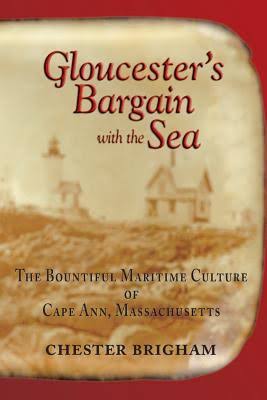
Gloucester has throughout four centuries cast its lot with the North Atlantic, remaining a maritime port for better or worse. The maritime culture of Cape Ann is the mix of a noble maritime heritage; ubiquitous sea influences that reach as far as the quarries behind Rockport and into the haunted tracks of Dogtown Common; seductive but capricious natural splendors; and untidy independence that repels some but converts other visitors into lifetime devotees. We plan to invite Chester Brigham, author of Gloucester’s Bargain with the Sea, to join us.  Read this or any other book about the maritime history of Gloucester. [Suggested by Richard Verrengia]

Wednesday, September 28, 2017: The History of History. Read any book about Historiography, or methods of recording history, from Herodotus and Thucydides to Saint Augustine to Ibn Khaldun. You might want to read about ways people have used history as propaganda, or to build up the image of a leader, or focus upon a particular kind of history. [Suggested by Sam Coulbourn]

Wednesday, October 25, 2017: The Industrial Revolution in New England.  Development of mills, the textile industry in Lowell, Lawrence, Manchester and elsewhere. Life in the mills, quality of life in the cities. Advent of the steam engine. Railroads. Banking and commerce in the Industrial age. Labor problems and unionization. Iron and steel production. Coal mining. Communications. [Suggested by Sam Coulbourn]

Wednesday, November 29, 2017: The Decline of Major Powers.  How does it happen, that a nation that has been calling all the shots suddenly finds out that it’s not the Big Cheese any longer? Read about Athens and Sparta, or look at Rome, or the Arab Caliphate, Spain, Great Britain, France, Germany, the Soviet Union. Do we see China coming to take the mace away from the United States of America?  [Suggested by Beverly Verrengia]

No meeting in December

Wednesday, February 28, 2018:  Famous Travelers and Adventurers before the 20th Century—their lives and stories. Marco Polo, Christopher Columbus, Lewis and Clark, Stanley and Livingstone, more. [Suggested by Walt Frederick]

Wednesday, March 28, 2018:  The U.S. Navy in Asia. The Asiatic Squadron. The Yangtze Patrol. Patrolling the Philippine Islands, “China Sailors”, World War II, The Seventh Fleet. [Suggested by Walt Frederick]

Wednesday, April 25, 2018:  A look at the world and times of Jane Austen. Rockport Public Library is celebrating “Austen in April”.  Read about the life of Austen, or focus upon England in the early 1800s, the Royal Navy at that time, the gentle English world Jane lived in. Feel free to read Sense and Sensibility, Pride and Prejudice, Persuasion, or any of her novels to gather a sense of Jane and her world. [Suggested by Christiann Guibeau]


Wednesday, May 30, 2018:  A History of Public Relations. Managing the news, propaganda, image-building. Hitler’s Joseph Goebbels. Ancient persuasive techniques.  [Suggested by Sam Coulbourn]


Wednesday, June 28, 2017

History of British Colonialism

History Book Club
Wednesday, June 28, 2017

British Colonialism

Wednesday, June 28, 2017:  History of English/British Colonialism It started in the latter part of the 15th Century with plantations in Ireland. Read how the United Kingdom grew to become the greatest Empire in the history of the world.  If you wish, home in on British slave trade, and how the U.K. colonized the New World, bringing slaves to grow sugar and cotton. Then Napoleonic Wars and Britain’s seizure of French Colonies. America and Canada.  Colonization of Asia in Hong Kong, Malaya, Australia, New Zealand, India, Burma. Africa, and more for you to discover. [Suggested by Richard Heuser]


Sergeev, Evgeny, The Great Game, 1856-1907 : Russo-British Relations in Central and East Asia; Washington, DC: Woodrow Wilson Center Press, 2013. w/index. 530pp.

            I’m very grateful for the opportunity ---and the peer pressure --- to explore history like we have for the past decade and a half.  Thanks to Rockport Public Library, and William Tobin, who originated the Rockport History Book Club, and thanks also to Beverly and Dick Verrengia, Richard Heuser, Janos Posfai, Walt Frederick and Bill Owen, along with several earlier members, we’ve ranged far and wide over time and space.

            We’ve studied the history of Russia and China, Africa; we’ve studied the history of religion, of music, art, journalism, food in America, exploration and colonization of America, the American family, industrialization in America, history of World War II, history of inequality, the Cold War, Spies and Spy Agencies, of Cape Ann, of early exploration, history of capitalism, of germs and plagues, of political parties, American Indians, Women’s Suffrage, Middle Eastern politics, and even the history of the future!

            The book I read for this month is The Great Game, and it is a comprehensive study of the efforts of the British and Russian empires “to change the destinies of the tribes of Central and South Asia, from turmoil, violence, ignorance and poverty to peace, enlightenment and varied happiness.” That aspiration belonged to Arthur Conolly, who is credited with naming this effort “The Great Game”.

            This “Great Game” was played by many, from kings, isars, pashas and shahs, to generals and military attachés, ambassadors, scholars, adventurers and scoundrels of all types.

            Author Evgeny Sergeev, who is Professor of History and Head of the Center for the Study of 20th-Century Socio-Political and Economic Problems within the Institute of World History at the Russian Academy of Sciences in Moscow, has delved into diaries, journals, official documents, telegrams, letters in Russian, British archives, and documents from archives of Iran, India and the post-Soviet republics of Central Asia, some that have only recently been made available.

            Since I was once a military advisor to the Shah of Iran, and traveled in the Turkoman region of Iran, then a decade later, as naval attaché to the USSR, traveled in Soviet Asian republics, it is exciting to see that places I visited figured so heavily in this “Game”.

            Author Sergeev makes a special point that this competition for national wealth and influence between Great Britain and Russia, which began after Britain had defeated Russia in the Crimean War (1853-56), was not a precursor to the Cold War, but “it deserves to be remembered as making a significant contribution not only to the development of Russo-British relations but also to a general contour of world politics in the twentieth century.”

            Rudyard Kipling, that great chronicler of Queen Victoria’s adventure in India, gave “The Great Game” more publicity and fame when he characterized it as a secret war against the Russians, and later against the French, who allied with the tsar in the 1890s.

            Throughout the entire period of “the Game”, Britain’s primary objective remained safeguarding the ‘jewel in her crown’, India, while Russia kept ever in view possession of an ice-free port, and access to strategic oceanic waterways.

            During the 51 years of “the Game” relations varied between the two empires. Tense in the late 1850s, “peaceful coexistence” in the 1870s, edging toward war (1877-88), peaceful easing in the 1890s, and brink of war in the early 1900s, climaxing with a rapprochement in 1907. There were plans by the Russians to attack India, to seize Tibet, Mongolia, and Persia.  The Russians acquired Turkmenia, which later became a Soviet republic; they also acquired Khiva, Bokhara and Khokand, which later became Uzbekistan.

            Russia’s seizure of Khiva alarmed the British and forced them to stiffen up their defenses for Russian invasion of India. 

            Russian advances on Tibet were aimed at Russian incursion into Qing China, but the British    feared that Russians would use Tibet as an entryway into India. Russian efforts succeeded in acquiring territory north of the Amur River in the Far East,

            The Sepoy Uprising (1857-58), seen by Indians as their first war for independence, shocked the British and made many Englishmen realize how Indians really felt toward them, encouraged Indians of the vulnerability of Britain, and encouraged Russians to seize the opportunity to invade and replace the British. The uprising was suppressed, and Queen Victoria granted British citizen rights to Indians.

            For us today, after years of modern conflict with radical Islamists, it is interesting to see how the British and the Russians coped with Muslims bitter over infidel intrusions in the nineteenth century.      
 
            Dr. R. Charles Weller of Washington State University, in reviewing Sergeev’s book, has pointed out that in the Sepoy uprising Britain called upon the debt owed them by Ottomans in the Crimean War (1853-56) to gain permission for troops to travel through Egypt and Suez to reinforce troops fighting in India, and the Ottoman Sultan provided remarkably effective help in urging Indian Muslims not to fight against the British. Weller goes on to point out that the Ottoman Sultan’s influence at this time led to the “dethroning of Muslim power in India”, so that Indian Muslims looked to the Ottoman leader as the sole Caliph of the Muslim world, so that discussion of “jihad” against the British as infidels was considered unnecessary.

            The whole period of the Great Game involved countless contacts between British, Russian and Islamic forces. Christianity vs. Islam thus was always a dominant theme in these interactions, sometimes working to the advantage of the Russians, sometimes to the advantage of the British.

            There were often sinister “helpers” to agitate either side, such as the Japanese intelligence officer who is alleged to have helped Russian Muslims to start the 1905 Russian Revolution.

            The “Great Game” came to an end when Russia, buffeted by an uprising in St. Petersburg, lost the Russo-Japanese war.  Although there was considerable anti-Russian sentiment in London, the British began to realize that Japan, an emerging Asian power, needed no encouragement, and further, in order to prevent the French from aligning with Germany, Britain, in August 1907, signed the Anglo-Russian Convention. The convention assigned spheres of influence in Persia, Afghanistan, and Tibet. Britain recognized Russia’s right to pass through the Turkish Straits, and Russia agreed not to interfere with the Sheikhs around the Persian Gulf.

            One thing that has concerned me is that during the whole Cold War of 1945-91, it seems as if most conflicts that involved the Russians or the Americans were related to our conflict with each other.  Where were the Taliban, al Qaeda, or the Islamic State of that time?  There were always Islamists, fighting the Israelis, high-jacking aircraft.  There were the Palestinian groups, Yasser Arafat.  But is it simply that our media, and we, were not paying attention?  Did the Cold War simply suppress Muslim unrest, or were we just not paying attention?

            Sergeev’s study of “The Great Game” doubtless found freshly uncovered and declassified Russian records from tsarist times, but it is interesting to see how he defends the Russian side in the “Game”, and calls attention to the somewhat superior British attitude toward Her Majesty’s colonial subjects.
            Working with senior British military officers in Tehran gave me a sense that attitudes had not changed much, The feeling of British superiority over Persians, Indians, etc. was very apparent.  I am sure many overseas Americans exhibit those same attitudes, however.
            It was refreshing to feel the connection between this nineteenth century “Game” and the “Game” we played in some of the same places a century later.

-end-

                            HISTORY BOOK CLUB TOPICS FOR 2017

Wednesday, July 26, 2017:euser]
 Treasure Hunts in History. This is your opportunity to find a treasure and discover the hunt for it, whether it is the quest for gold in California, diamonds in Africa, the hunt for the pharaohs buried in the pyramids, the hunt to discover a cure for polio or yellow fever, the terracotta army buried with Qin Shi Huang, the First Emperor of China, the search for the source of the Nile, the discovery of Neanderthal man… This topic is for you to imagine!  [Suggested by Walt Frederick]

Wednesday, August 31, 2017: Gloucester and the Sea.  euser]
Gloucester has throughout four centuries cast its lot with the North Atlantic, remaining a maritime port for better or worse. The maritime culture of Cape Ann is the mix of a noble maritime heritage; ubiquitous sea influences that reach as far as the quarries behind Rockport and into the haunted tracks of Dogtown Common; seductive but capricious natural splendors; and untidy independence that repels some but converts other visitors into lifetime devotees. We plan to invite Chester Brigham, author of Gloucester’s Bargain with the Sea, to join us.  Read this or any other book about the maritime history of Gloucester. [Suggested by Richard Verrengia]

Wednesday, September 28, 2017: The History of History. Read any book about Historiography, or methods of recording history, from Herodotus and Thucydides to Saint Augustine to Ibn Khaldun. You might want to read about ways people have used history as propaganda, or to build up the image of a leader, or focus upon a particular kind of history. [Suggested by Sam Coulbourn]

Wednesday, October 25, 2017: The Industrial Revolution in New England.  Development of mills, the textile industry in Lowell, Lawrence, Manchester and elsewhere. Life in the mills, quality of life in the cities. Advent of the steam engine. Railroads. Banking and commerce in the Industrial age. Labor problems and unionization. Iron and steel production. Coal mining. Communications. [Suggested by Sam Coulbourn]

Wednesday, November 29, 2017: The Decline of Major Powers.  How does it happen, that a nation that has been calling all the shots suddenly finds out that it’s not the Big Cheese any longer? Read about Athens and Sparta, or look at Rome, or the Arab Caliphate, Spain, Great Britain, France, Germany, the Soviet Union. Do we see China coming to take the mace away from the United States of America?  [Suggested by Beverly Verrengia]

No meeting in December

Wednesday, January 31, 2018:  Manifest Destiny: The 19th century period of American expansion that the United States not only could, but was destined to, stretch from coast to coast. Western settlement, Native American removal and war with Mexico. Louisiana Purchase, Lewis and Clark Expedition, Missouri Compromise, Oregon Territory, Indian Wars, Union Pacific Railway, Texas, California… [Suggested by Sam Coulbourn]

Wednesday, February 28, 2018:  WHAT TOPIC DO YOU SUGGEST?

Wednesday, March 28, 2018:  WHAT TOPIC DO YOU SUGGEST?

Wednesday, April 25, 2018:  WHAT TOPIC DO YOU SUGGEST?


Wednesday, May 31, 2017

History of Famines

History Book Club
Wednesday, May 31, 2017
Famines in the World


Wednesday, May 31, 2017: Famines in the World.  Famines have killed millions over the centuries.  In modern times there have been disastrous famines in Somalia, Congo, South Sudan, all over West Africa. The Irish Potato Famine of 1845-49 killed over a million and sent many to America.  Famines in Russia, Korea, China, Japan, Poland, England, Iceland, France, Italy, Sweden, Finland and India all have legends attached to them.     [Suggested by Linda Burkell and Walt Frederick]


Cormac Ó Gráda,  Black '47 and Beyond: The Great Irish Famine in History, Economy, and Memory. First paperback printing, 2000, Princeton, NJ: Princeton University Press. 302 pp.
Winner of the 2000 James S. Donnelly Sr. Prize for Best Book on Irish History or Social Studies

           
            “It’s an ill wind that blows no good” is an old saying.
 
            The Great Irish Famine of 1847 was the most lethal natural disaster to strike Europe in the nineteenth century.  Over a million died, in an event that was a perfect storm of dependence upon one food source, greed, huge accumulation of debt amongst landowners, and official incompetence.  At its most critical point in 1847, it lasted at least five years. Emigration to America peaked in 1851.

            The famine encouraged (or forced) over one million Irish men, women and children to leave home, and move to England, Canada, the United States, and elsewhere.  Many Irish came right here to Boston, and became strong participants in the growth of our country. 

            Cormac Ó Grada (b. 1945) is an Irish economist, a professor of economics at University College Dublin, and a prolific author of books and academic papers.

            Ó Grada notes that in the 1840s people in high places in Dublin and London viewed the famine as nature’s response to Irish demographic irresponsibility.  He quotes a contemporary writer who observed “Ireland died of political economy.”

            Ó Grada has produced a masterful textbook on famine and the economics surrounding and contributing to it.  He compares the Irish famine to later famines, particularly recent ones in Biafra, Somalia, Ethiopia and the Sahel.

            This book is loaded with tables and graphs, showing variations in price of potatoes in various locations, acres planted in potatoes by county and year, variation in potato prices by county, changes in population by county, mortality by years during the famine, variation in deaths by county, deaths on ships bound for America, deaths by the various famine-related diseases (including dysentery, diarrhea, fever, dropsy), exports and imports of grain by years, pawnbroking during the famine, Dublin bank stock prices, and much more. Fortunately, there are good descriptions of conditions and events during the famine.

            The author’s many tables of data tended to overwhelm this reader, because it becomes a worrisome plum pudding of possible contributing factors. One is inclined to think that he simply throws all this stuff up, leaving the reader to imagine what it was that caused this famine

            Was this famine simply bad luck, or was it a result of greedy landlords, merchants and bankers, dismissive government bureaucrats, a Parliament and Queen who preferred to look the other way?

            A big difference in modern African famines and Ireland’s 1847 famine is all those today are in backward countries with low levels of agricultural and industrial development.  Ireland in 1847 was indeed quite backward, but it was only a few miles from the most progressive and prosperous economy in the world.

            It is hard for us today to imagine what life must have been like for millions of poor rural Irish. They lived in huts with mud floors, without even a glass window.  Children, farm animals, all together in one cold, smoky room.  Children often went barefoot even in winter, and sickness dragged them down mercilessly.  For food, it was often just the potatoes that they could dig up from the family plot, so that when Phytopthera infestans (potato blight) turned the potatoes into black mush, there was nowhere to turn.

            Winter was cold and damp, and the rural poor, surrounded by weed-choked and untended land “and no preparation in the way of seed”, kept warm with a peat fire, tended to semi-hibernate.  Ó Grada calls this situation what development economists call a low-level equilibrium or poverty trap: a labor force too short of capital to be productive at home and too poor to emigrate and be productive elsewhere.
            As more and more people fell into the poverty trap, and had nothing to eat, government offered meager wages for public works projects. Tradespeople accustomed to working indoors had no trade, so they joined those on these work projects, working in miserable winter conditions. It was a recipe for sickness and trouble. 

            Prison was preferable. In Limerick in 1849 1200 cases appeared in court, and all pleaded guilty in hopes of being held in prison. Two defendants who were set free were recommitted the next day because they attempted to break into jail.

            The confiscations 0f the sixteenth and seventeenth centuries had left most Irish land in the hands of a small elite of English origin.  In the mid-nineteenth century the elite still owned the bulk of the country’s fixed capital and was still very powerful politically. Ó Grada connects this to the famine in three ways: (1) Landlords generally did nothing to control population or subdivision on their lands; (2) On the eve of the famine a significant portion of the landlords were in serious financial trouble, so that they were incapable of making the repairs and improvements necessary for sustaining life; and (3) landlords generally did not live on the land, so the destitute were even more poorly served when famine struck.

            The writings of Thomas Malthus come in for discussion here.  Malthus taught that food increases arithmetically while population increases geometrically. In 1808 Malthus predicted that Ireland’s catholic masses, greatly dependent upon potatoes for food, might be headed for trouble. But Ó Grada writes that on the eve of the famine, the Irish birth rate was down, and Irish women were not marrying until their mid-twenties, and men three years older.

            The ideas of Malthus are certainly worthy of our consideration, but perhaps this famine did not fit the Malthusian pattern.

            Ó Grada includes a chapter called “Famine Memory” consisting of oral histories gathered nearly a century after the famine. This chapter contains much of the color you expect from any Irish tale.  The cruel landlords during the famine –Lord Lansdowne of south Kerry, Wyndham Goold of Limerick, Lord George Quin of east Clare. The good ones---Cronin Coltsman of Knocknagree in northwest Cork, the Bournes of Rossport in northwest Mayo, the Fitzwilliams of south Wicklow, Charles Tottenham of Kiltyclogher…There are stories of carrying the dead and nearly-dead to the graveyard and just depositing them there.  A tale about a man caught stealing turnips, and several tales about eating potatoes. There’s a tale from south Kerry of biscuits given out down from the Cumaraibh, and they fought bitterly over them, and they got a small can of soup once a week to go with the biscuits. And there are stories of saintly sacrifice and selflessness.

            Summary: In the end the Irish Potato Famine was the result of a population that was backward and repressed, but because of cheap food (potatoes) that population grew to the point that when that food source failed, there was disaster.  Because of irresponsible, greedy and incompetent landlords, a government bureaucracy that was thick-headed and dismissive, and neglect and disengagement all the way back to London and Queen Victoria.  The event, however, changed Irish society, and created a whole population shift for the United States and Canada.

            It was a hard time for Ireland, but brought a lot of fine Irishmen to America.
.
Famine victims at Skibbereen, west Cork, 1847 by James Mahony
           
-end-
                            HISTORY BOOK CLUB TOPICS FOR 2017

Wednesday, June 28, 2017:  History of English/British Colonialism It started in the latter part of the 15th Century with plantations in Ireland. Read how the United Kingdom grew to become the greatest Empire in the history of the world.  If you wish, home in on British slave trade, and how the U.K. colonized the New World, bringing slaves to grow sugar and cotton. Then Napoleonic Wars and Britain’s seizure of French Colonies. America and Canada.  Colonization of Asia in Hong Kong, Malaya, Australia, New Zealand, India, Burma. Africa, and more for you to discover. [Suggested by Richard Heuser]

Wednesday, July 26, 2017:euser]
 Treasure Hunts in History. This is your opportunity to find a treasure and discover the hunt for it, whether it is the quest for gold in California, diamonds in Africa, the hunt for the pharaohs buried in the pyramids, the hunt to discover a cure for polio or yellow fever, the terracotta army buried with Qin Shi Huang, the First Emperor of China, the search for the source of the Nile, the discovery of Neanderthal man… This topic is for you to imagine!  [Suggested by Walt Frederick]

Wednesday, August 31, 2017: Gloucester and the Sea. Gloucester has throughout four centuries cast its lot with the North Atlantic, remaining a maritime port for better or worse. The maritime culture of Cape Ann is the mix of a noble maritime heritage; ubiquitous sea influences that reach as far as the quarries behind Rockport and into the haunted tracks of Dogtown Common; seductive but capricious natural splendors; and untidy independence that repels some but converts other visitors into lifetime devotees. We plan to invite Chester Brigham, author of Gloucester’s Bargain with the Sea, to join us.  Read this or any other book about the maritime history of Gloucester. [Suggested by Richard Verrengia]

Wednesday, September 28, 2017: The History of History. Read any book about Historiography, or methods of recording history, from Herodotus and Thucydides to Saint Augustine to Ibn Khaldun. You might want to read about ways people have used history as propaganda, or to build up the image of a leader, or focus upon a particular kind of history. [Suggested by Sam Coulbourn]

Wednesday, October 25, 2017: The Industrial Revolution in New England.  Development of mills, the textile industry in Lowell, Lawrence, Manchester and elsewhere. Life in the mills, quality of life in the cities. Advent of the steam engine. Railroads. Banking and commerce in the Industrial age. Labor problems and unionization. Iron and steel production. Coal mining. Communications. [Suggested by Sam Coulbourn]