Tuesday, October 24, 2017

The Mill Girls at Amoskeag

History Book Club
Wednesday, October 25, 2017

Mill Girls in Amoskeag Mill, Manchester, NH, ca. 1880

The Industrial Revolution in New England

Wednesday, October 25, 2017: The Industrial Revolution in New England.  Development of mills, the textile industry in Lowell, Lawrence, Manchester and elsewhere. Life in the mills, quality of life in the cities. Advent of the steam engine. Railroads. Banking and commerce in the Industrial age. Labor problems and unionization. Iron and steel production. Coal mining. Communications. [Suggested by Sam Coulbourn]

            Amoskeag—Life and Work in an American Factory-City, Pantheon Village Series, by Tamara K. Hareven & Randolph Langenbach, 1978. New York, NY: Pantheon Books. 394 pp. Paper.

            Tamara Hareven, University of Delaware Professor of Family Studies and History, with a joint appointment in urban affairs and public policy, born in 1937 in Chernivtsi, Ukraine, died in Newark, DE in 2002. A social historian, she was one of the foremost leaders in the field of family history.

            In the 1970s, Dr. Hareven began her studies of the families who had worked in the Amoskeag Mills in Manchester, N.H., resulting in “Amoskeag: Life and Work in an American Factory City” (1978), followed by “Family Time and Industrial Time: The Relationship Between the Family and Work in a New England Industrial Community” (1982).

            Focusing on the family’s relationship to the process of industrialization, she interviewed generations of families about their work and family lives and about how events–such as the closing of the mills and World War II–and how personal responsibilities–such as caring for aged parents–affected their lives.

            Randolph Langenbach's educational background is in both Architecture and in Building Conservation. He received a Master's of Architecture from Harvard University, and a Diploma in Conservation Studies from the Institute of Advanced Architectural Studies in York, England.

            His professional experience includes working as an independent consultant in Historic Preservation Planning and Design for over 16 years and teaching as an Assistant Professor of Architecture at the University of California. He is currently employed at the Federal Emergency Management Agency (FEMA) where he works with technical analysis and cost estimation for the rehabilitation of significant historical buildings.

            This is the story of a city that began as a factory.  The Amoskeag company founded the city of Manchester, NH and dominated it over the entire century of its existence, from beginning of construction in 1838 until 1936 when the mills shut down.

            This book is a collection of oral history interviews with the people who worked in Amoskeag mills, from the boss on down to many of the people who came here as youngsters from elsewhere in New England, and then from Ireland, Germany, Greece and Canada.

            We often have a romantic view of life in the old days on the farm, but the people who worked at Amoskeag came from farms. Life was brutal on those farms, with much starvation and deprivation.

            Later, the supply of American women was insufficient, and thousands of young women came from Canada, and then from Ireland and elsewhere in Europe.  They were taking jobs that more established Americans wouldn’t take.       Because of this, these people could take a lot of punishment, and they worked long, hard hours in the mills, under sometimes miserable conditions.

            Contrary to the prevailing popular idea that large factories and the urban environment cause individual lack of moral standards and social fragmentation, most of these people had a highly developed sense of place and formed tightly knit societies around their kin and ethnic associations.

            Amoskeag was an exercise in social engineering that began at the mills in Lowell.  Farmers sent their “excess” daughters down from New Hampshire and Vermont to the mills.  If they didn’t marry, they were another mouth to feed, so onto the train they climbed, and went to the mills to work for one dollar a week.

Mill Girls had a hard life
            The mills were full of these young rural New England women, and the owners treated them as “the corporation’s children”, with dormitory doors locked at 10 p.m., and mandatory church attendance. Alcohol consumption was prohibited.  These clean-cut young New England women were brought up in God-fearing families, they were usually far better educated than the average high school student today, and they made excellent employees.
            I had the privilege of buying a packet of letters written by a young woman working in the mills at Lowell in the mid-1840s, to her parents in northern New Hampshire. Those letters were a rich look into New England life in those days.
            Although they often lived in dormitories supervised by a stern older woman, the letters I read reported the occasional girl who would get snared by an old landlord, or a young dandy, and impregnated.  In their religious culture, that sometimes meant that the girl felt so ashamed that she would take poison and end it all.
            Shortly before the Civil War Irish immigrants began to come in increasing numbers, and whole families would work for what the American girls were paid.  The corporation built boardinghouses for these families, and speculators built more tenements. This marked the end of the so-called “utopian” period.
            You quickly get into the life in the mills, with words like bale breaker, breaker picker, carding, drawing, fine frame, jack frame, creel, warper, slasher, burling, burshing, singing and napping, doffing and dobby loom. 
            Antonia Bergeron was 96 at the time of her interview in 1976. She came to Manchester from Quebec in 1885, at the age of 15, and got married in 1899.  “Misery, you know, was made for people; it’s not for dogs. I had a dog, and he never had any misery. He’d lay down under the stove and he was fine.”
            Amoskeag during the Depression was forced to lay off workers and cut production.  At the same time a labor strike shut down the looms; this was the last straw—the company was forced to close, beginning a long, sad period for Manchester.

-end-

                            HISTORY BOOK CLUB TOPICS FOR 2017-18

Wednesday, November 29, 2017: The Decline of Major Powers.  How does it happen, that a nation that has been calling all the shots suddenly finds out that it’s not the Big Cheese any longer? Read about Athens and Sparta, or look at Rome, or the Arab Caliphate, Spain, Great Britain, France, Germany, the Soviet Union. Do we see China coming to take the mace away from the United States of America?  [Suggested by Beverly Verrengia]

No meeting in December

Wednesday, January 31, 2018:  Manifest Destiny: The 19th century period of American expansion that the United States not only could, but was destined to, stretch from coast to coast. Western settlement, Native American removal and war with Mexico. Louisiana Purchase, Lewis and Clark Expedition, Missouri Compromise, Oregon Territory, Indian Wars, Union Pacific Railway, Texas, California… [Suggested by Sam Coulbourn]

Wednesday, February 28, 2018:  Famous Travelers and Adventurers before the 20th Century—their lives and stories. Marco Polo, Christopher Columbus, Lewis and Clark, Stanley and Livingstone, more. [Suggested by Walt Frederick]

Wednesday, March 28, 2018:  The U.S. Navy in Asia. The Asiatic Squadron. The Yangtze Patrol. Patrolling the Philippine Islands, “China Sailors”, World War II, The Seventh Fleet. [Suggested by Walt Frederick]


Wednesday, April 25, 2018:  A look at the world and times of Jane Austen. Rockport Public Library is celebrating “Austen in April”.  Read about the life of Austen, or focus upon England in the early 1800s, the Royal Navy at that time, the gentle English world Jane lived in. Feel free to read Sense and Sensibility, Pride and Prejudice, Persuasion, or any of her novels to gather a sense of Jane and her world. [Suggested by Christiann Guibeau]


Wednesday, May 30, 2018:  A History of Public Relations. Managing the news, propaganda, image-building. Hitler’s Joseph Goebbels. Ancient persuasive techniques. How information, false. Tainted or factual, can be used to elect leaders, start wars, and more. [Suggested by Sam Coulbourn]

Wednesday, June 27, 2018: The History of Language. Can you understand the English spoken by Chaucer? [WHAN that Aprille with his shoures soote; The droghte  of Marche hath perced to the roote, And bathed every veyne in swich  licour,]  Choose any language and learn how it grew from its ancient roots, how it absorbed other languages, how it spread, and its variations in use in the world today. Did you know that only one in 40 Italians spoke Italian in 1861?  What language is most widely spoken in the world today? How are languages changing in modern times? [Suggested by Sam Coulbourn]


Wednesday, July 25, 2018:  Immigration to America. How did we all get here?  Read about the history of immigration, at any stage – from first settlers to the great immigration waves of the 19th and early 20th centuries; victims of the Irish Potato famine, Jews fleeing persecution in Europe, Europeans suffering poverty in their countries, Africans brought here as slaves, Chinese brought here to build railroads; Fugitives of war everywhere; Mexicans and Central Americans coming to pick crops. Read about immigration policies and national drives to keep out or encourage immigration. [Suggested by Walt Frederick.]

Wednesday, August 29, 2018.  Let’s hear your suggestion for a history topic!


Sunday, October 22, 2017

The Cuban Missile Crisis, 55 Years Ago


The Cuban Missile Crisis


Kennedy Announces Cuban Missile Quarantine

Looking back 55 years.... on October 22, 1962:

In October 1962 President Kennedy announced the Cuban Missile Quarantine and USS Sablefish  joined a massive submarine-aircraft barrier to defend against a possible Soviet submarine invasion.          
I was on leave, with my wife and children, visiting my parents in Port Arthur, Texas when President Kennedy went on television (Oct. 22, 1962) and declared the Cuban Missile Quarantine. 
            We piled our two boys in our Opel station wagon and headed back to New London.  All along the way, through Louisiana, Arkansas,Tennessee and on to Connecticut, Americans were getting ready for war. Here only 17 years after World War II, most adults knew about war, and people were digging air raid shelters, and storing up water and food.  The Navy and the Air Force were flying all manner of military aircraft to Florida, and Navy ships were all heading to sea.  Someone said that Florida nearly sank below sea level with all the planes!
            The whole American Defense establishment went to Defense Condition THREE, which meant this was really serious business!


USS Sablefish

             My submarine, Sablefish, got ready for war patrol, welding the escape hatches shut, and quietly glided out to sea, before I could return. 

            When I arrived in New London I was assigned to a staff to be flown “somewhere” to coordinate the Quarantine operations between submarines, surface ships, and anti-submarine aircraft.  As many of our ships encircled Cuba, we fully expected the whole Soviet submarine force to come roaring out of USSR bases in the Soviet Arctic and sail around the North Cape, and down into the Atlantic.  Our submarines and antisubmarine warfare (ASW) ships and aircraft would be there to meet them.

            It was still a secret where we were going to set up a staff.

            Within a few hours, we boarded buses and headed for Brunswick Naval Air Station in Maine, and we were off— we thought maybe Keflavik,Iceland, maybe Argentia, Newfoundland. 

            A few hours later, we landed in Argentia, Newfoundland.  It was late October, and in Newfoundland, it is cold and the wind blows nearly all the time.  If you are planning a vacation in Newfoundland, I advise against October.  

            We were located on a U.S. Air Force base, and I was assigned a room on the tenth floor of a Bachelor Officers’ Quarters on this desolate base.  If the icy wind was miserable at ground level, on the tenth floor it was much worse.  However, there was no time for idling— the room was just for a few hours of sleep between shifts, because we were tasking a huge collection of submarines, patrolling all across the Atlantic Ocean, and aircraft, flying over them, coordinating ASW operations.  There were also aircraft flying other electronic emission detection missions.  Of course this was all happening around the clock.

            I went along on some of the airborne ASW detection missions about P2V Lockheed Neptune planes.  These planes carried a crew of about eight, and stayed airborne for about 10-12 hours.  That was a lot of time to spend looking at thousands of square miles of ocean, and listening to sensor signals and radio messages from our submarines.  Our airborne antisubmarine warfare people do a tremendous job, operating in often miserable weather!

            On October 28, 1962, Soviet General Secretary Nikita Khrushchev announced that he was pulling Soviet nuclear missiles out ofCuba, and President Kennedy ended the Quarantine shortly afterward.  My submarine came back to port, and I went back aboard.  


Thursday, September 28, 2017

History by Herodotus

History Book Club
Wednesday, September 27, 2017

Herodotus
The History of History


            Herodotus, Oxford World’s Classics: Herodotus, The Histories, Translated by Robin Waterfield, with introduction by Carolyn DeWald, Oxford University Press: New York, 1998, 2008. 792 pp.

            Herodotus is considered by many to be the father of western history. He was born in about 485 B.C.in Halicarnassus, which is now Bodrum, Turkey, He seems to have spent most of his life travelling from one place to another. Born into a wealthy Greek-Carian family, Halicarnassus was part of the Persian Empire, and Herodotus’ family opposed the ruler, and were exiled to the island of Samos. During his life he visited Egypt, and traveled through Palestine to Syria and Babylon. He headed to Macedonia and visited all the islands of the Greek Archipelago: Rhodes, Cyprus, Delos, Paros, Thasos, Samothrace, Crete, Samos, Cythera and Aegina. He sailed through the Hellespont to the Black Sea and kept going until he hit the Danube River.

Asia Minor, in the time of the Græco-Persian Wars

            During all this time he collected stories, and told them to groups, as he began to construct a history of the Græco-Persian War. It was probably written down by others, and not assembled into the nine books that we see in this edition until after his death.

            What a story it is!  If much ancient history seems to be a dull catalog of kings and battles and palace intrigue, this is a refreshing shower of intrigue, sex, skullduggery and color. Over and over he inserts little stories from his travels, like the Arabian sheep whose tails were so huge that they dragged on the ground, one cubit wide (18”) and four cubits (6’) long. The Arabs built little carts to follow the sheep around. Sound like a tall tale?  And there are rats from India as big as dogs, and a tale about a mule giving birth.

            Herodotus starts Book 1 with the mythic stories of the abductions of four women.  They represent the four geographical areas the Histories will cover: Io is an Argive Greek who is taken to Egypt; Europa is a Phoenician taken to Crete; Medea is a Colchian, from the region of the Black Sea, and first goes to Greece and then eventually to Media; and Helen is a Spartan who is taken to Troy. 

            Herodotus reports that some of these kidnappings may have been exaggerated.  For instance, Io is reported to have slept with the Phoenician ship’s captain in Argos, and then discovered she was pregnant.  Rather than face her parents, she sailed away willingly with the Phoenicians to Egypt.

            There are lots of little stories inserted throughout.  Early in Book 1 there is this Lydian King named Caudales, who thought he had the most beautiful wife in the world. He remarked about this to his loyal subject, Gyges, but he sensed that Gyges didn’t believe him.  As if it mattered.  Caudales then set up a scheme where Gyges could be stationed next door to the royal bedroom, so that when the queen disrobed, he would see her. It was then planned for him to depart without being detected.  The queen, however, did detect him, and was enraged that she should be humiliated. She didn’t let Caudales know how she felt, though. In the non-Greek world, Herodotus writes, it was a thing of great shame to be seen naked by anyone other than your wife or husband.

            The queen had her slave woman summon Gyges, and told him that he must either kill Caudales, her husband, or kill himself. Gyges elected to kill his king, and so that is how the royal line shifted. There was a payoff to the Oracle at Delphi involved in this. The priests at Delphi collected some fine treasures as bribes to sway the public.

            All this was a leadup to the men who would lead the Persian and Greek armies.

            The Græco-Persian Wars went on and on, from 492 to 449 B.C. Persia’s empire in those days extended all the way across the Anatolian peninsula to the Aegean Sea.  In 522 B.C. Darius became Shah of Persia. Herodotus tells a long tale about a self-educated doctor named Democedes, from Greece. Darius heard about Democedes and had him brought to him because he was suffering from a painful, debilitating ankle.  Persian doctors had tried all kinds of painful, forceful attempts to cure him, but it looked like he’d be crippled for life. Democedes had a very gentle treatment that cured the ankle completely.  Darius was delighted, and sent the doctor off with his eunuchs to visit the royal wives. They dipped cups into their chests of gold and gave them to him.  But he was enslaved.

            Then Atossa, Darius’ main wife, developed a growth on her breast.  Democedes cured that, and the queen promised to work on getting him freed to go back to Greece.  She suggested that it was time for him to demonstrate his manliness. He said he planned to invade Scythia (modern Ukraine), but she said she heard that Greek women slaves were excellent, and she wanted some. 
  
            Some Greek city states in the western part of the Persian Empire were rebelling, so this seemed like a good idea.  Darius sent several senior Persians on a trip to gather detailed intelligence about Greece, and had them take Democedes as their guide.

            Then Darius launched an invasion of the Greek mainland. However, much of his fleet was destroyed in a storm, and he returned to Persia. Two years later. A Persian army of 25,000 men landed unopposed on the Plain of Marathon. The Athenians asked help from the Spartans, but they were having a religious celebration, so the Athenians, with 10,000 men, faced the Persians. The Greeks surprised the Persians, killing 6400 while losing only 192.

Thermopylae

            The Persians went home, and Xerxes replaced Darius, and ten years later, they marched on Greece again. This time they brought a huge force, Herodotus wrote “5,283,220” which included Arabian camel riders, cavalry, and thousands of sailors and marines. Herodotus writes also about the thousands of camp-followers, cooks, concubines, eunuchs, Indian dogs, and yoked animals. Later scholars think it was far less. The Greeks encountered them at a narrow mountain pass called Thermopylae, on the Greek coast 200 km. northwest of Athens. Greek strategy called for their navy to defeat the Persian navy at Artemisium, nearby. There was treachery and heroism. The Persians marched south and burned Athens, but the city had been evacuated.

            Herodotus pauses at Artemisum to tell about one encounter between a Persian and Greek ship. Even after the Greek ship had been captured, one marine, Pytheas, fought with amazing bravery, even as his whole body was being hacked to pieces.  The Persian marines were so impressed with his bravery that they bandaged him up, dressed his wounds with myrrh, and treated him with honor, while all the other captives were treated as slaves.

            The next month the Persian fleet sought to attack the Greek navy, but Themistocles, the Greek naval commander, faked a retreat and led them into a trap at the Strait of Salamis, a few miles up the coast from Athens, and beat them soundly.

            A short time later the Persians retreated to Asia again.

-end-

      HISTORY BOOK CLUB 
    TOPICS FOR 2017-18


Wednesday, September 28, 2017: The History of History. Read any book about Historiography, or methods of recording history, from Herodotus and Thucydides to Saint Augustine to Ibn Khaldun. You might want to read about ways people have used history as propaganda, or to build up the image of a leader, or focus upon a particular kind of history. [Suggested by Sam Coulbourn]

Wednesday, October 25, 2017: The Industrial Revolution in New England.  Development of mills, the textile industry in Lowell, Lawrence, Manchester and elsewhere. Life in the mills, quality of life in the cities. Advent of the steam engine. Railroads. Banking and commerce in the Industrial age. Labor problems and unionization. Iron and steel production. Coal mining. Communications. [Suggested by Sam Coulbourn]

Wednesday, November 29, 2017: The Decline of Major Powers.  How does it happen, that a nation that has been calling all the shots suddenly finds out that it’s not the Big Cheese any longer? Read about Athens and Sparta, or look at Rome, or the Arab Caliphate, Spain, Great Britain, France, Germany, the Soviet Union. Do we see China coming to take the mace away from the United States of America?  [Suggested by Beverly Verrengia]

No meeting in December

Wednesday, January 31, 2018:  Manifest Destiny: The 19th century period of American expansion that the United States not only could, but was destined to, stretch from coast to coast. Western settlement, Native American removal and war with Mexico. Louisiana Purchase, Lewis and Clark Expedition, Missouri Compromise, Oregon Territory, Indian Wars, Union Pacific Railway, Texas, California… [Suggested by Sam Coulbourn]

Wednesday, February 28, 2018:  Famous Travelers and Adventurers before the 20th Century—their lives and stories. Marco Polo, Christopher Columbus, Lewis and Clark, Stanley and Livingstone, more. [Suggested by Walt Frederick]

Wednesday, March 28, 2018:  The U.S. Navy in Asia. The Asiatic Squadron. The Yangtze Patrol. Patrolling the Philippine Islands, “China Sailors”, World War II, The Seventh Fleet. [Suggested by Walt Frederick]


Wednesday, April 25, 2018:  A look at the world and times of Jane Austen. Rockport Public Library is celebrating “Austen in April”.  Read about the life of Austen, or focus upon England in the early 1800s, the Royal Navy at that time, the gentle English world Jane lived in. Feel free to read Sense and Sensibility, Pride and Prejudice, Persuasion, or any of her novels to gather a sense of Jane and her world. [Suggested by Christiann Guibeau]


Wednesday, May 30, 2018:  A History of Public Relations. Managing the news, propaganda, image-building. Hitler’s Joseph Goebbels. Ancient persuasive techniques. How information, false. Tainted or factual, can be used to elect leaders, start wars, and more. [Suggested by Sam Coulbourn]

Wednesday, June 27, 2018: The History of Language. Can you understand the English spoken by Chaucer? [WHAN that Aprille with his shoures soote; The droghte  of Marche hath perced to the roote, And bathed every veyne in swich  licour,]  Choose any language and learn how it grew from its ancient roots, how it absorbed other languages, how it spread, and its variations in use in the world today. Did you know that only one in 40 Italians spoke Italian in 1861?  What language is most widely spoken in the world today? How are languages changing in modern times? [Suggested by Sam Coulbourn]


Wednesday, July 25, 2018:  Immigration to America. How did we all get here?  Read about the history of immigration, at any stage – from first settlers to the great immigration waves of the 19th and early 20th centuries; victims of the Irish Potato famine, Jews fleeing persecution in Europe, Europeans suffering poverty in their countries, Africans brought here as slaves, Chinese brought here to build railroads; Fugitives of war everywhere; Mexicans and Central Americans coming to pick crops. Read about immigration policies and national drives to keep out or encourage immigration. [Suggested by Walt Frederick.]


Thursday, July 27, 2017

Hunt for Trojan Gold

History Book Club
Wednesday, July 26, 2017
Treasure Hunts in History

Wednesday, July 26, 2017:euser]
 Treasure Hunts in History. This is your opportunity to find a treasure and discover the hunt for it, whether it is the quest for gold in California, diamonds in Africa, the hunt for the pharaohs buried in the pyramids, the hunt to discover a cure for polio or yellow fever, the terracotta army buried with Qin Shi Huang, the First Emperor of China, the search for the source of the Nile, the discovery of Neanderthal man… This topic is for you to imagine!  [Suggested by Walt Frederick]

Map of Ancient Troy, western Turkey and Hellespont

Payne, Robert, The Gold of Troy: The Story of Heinrich Schliemann and the buried cities of ancient Greece, New Yori: Funk & Wagnalls Co., 1959. W index. 273 pp.
            This is the story of an amazing man who seems to have been able to smell gold while it was still in the ground. Heinrich Schliemann was born January 6, 1822, in Neu Buckow in Mecklenburg. Two years later his father became pastor of a church in the little town of Ankershagen,. also in Mecklenburg. and near the border with  Poland.
            Young Heinrich grew up in a family that encouraged learning. His father would read German translations of Homer’s Iliad and Odyssey. At an early age Heinrich began learning languages and reading.  The stories of ancient Troy captured his imagination.
            Heinrich’s father sent him to good schools, but in his teen years his father got caught stealing money from his church and was found to be having relations with the maid, so he lost his parish, school stopped, and Heinrich went to work.
            A young neighbor one time when Heinrich, at age 18,  was feeling discouraged about his life.  The man, although he was drunk, recited a hundred lines of Homer in the original Greek. Heinrich was thrilled, and soon began to read Homer, and learned classical Greek.
            Heinrich discovered that he could learn a language in weeks, and so he learned French, and English, and Modern Greek…and Spanish, Italian, Portuguese, Russian, Swedish, Danish, Turkish and Arabic. He also found that he could make money.
            Heinrich took a job with a shipping firm which sent him to St. Petersburg, Russia. He met Ekaterina, daughter of a wealthy merchant.  They were married in 1852.
            At the time when Britain, France and the Ottoman Empire were fighting Russia in the Crimean War, (1853-1856) he bought a cargo of saltpeter, used in the manufacture of gunpowder, and sold it to the Russians. Just when countries were closing ports because of the war, he cornered the market in indigo dye.  He figured a way to ship it to a neutral port, and sold it for a fortune. He did this again with olive oil, tea and cotton, and found that he could outguess the other merchants to make more money.
            Although Heinrich and Ekaterina had three children, he found out early on that she was frigid and despised him, and he worked at obtaining a divorce.  Her “frigidity” may have been caused by the fact that Heinrich had become quite self-centered and obnoxious.
            Heinrich pursued divorce proceedings through the United States, using liberal Indiana divorce law. He went to Indianapolis, convinced authorities that he was an American and wished to make his life in Indiana. He waited for the divorce to become final. He didn’t like the hotels, so he bought a house in a fine part of Indianapolis. All this time Ekaterina stayed in Russia.         
            Now 47 years old, he still kept alive a yearning to go to Greece and retrace the stories Homer told, and to discover the secrets of Troy. When the divorce became final in 1869, he left for Athens, to look for a new wife and to start his archeological career.
            He asked a Greek priest whom he had met in Russia to find a beautiful Greek girl for him to marry.  She had to be intelligent, know Homer, and be willing to put up with him. The priest produced a young relative, Sophia, aged 17, 30 years younger than Heinrich. They married and immediately he went to look for the remnants of the civilization that Homer had described.


            His first explorations were at Mycenae, near Argos, on the Peloponnesian Peninsula. Heinrich spent a lot of time negotiating with the Greek and Turkish governments to get permission to dig.  However, he distrusted the officials, and so it became a cat-and-mouse game with them dragging their feet to give him permission, and trailing him to ensure he was not cheating, which he was.
            In these years, archeology was very new, and Schliemann indeed was doing a very earnest and ambitious search.  He had the money to employ a large team to carry out the heavy work of lifting huge stones, and digging down through many layers of 6000 or more years of civilization.
            He began his digging to find ancient Troy.  This was where Helen was kept captive, where the ten-year war was fought. Xerxwes, King of Persia, had passed here. Heinrich could imagine Alexander, on his way to make war with Persia, would swim the Hellespont.
            In May 1873 Heinrich made his big discovery in a fortification wall. When he caught the glimmer of the metal, he released the workers for a holiday, then tore away with his pocket knife. He found a copper shield, a copper cauldron, a silver vase and another of copper, a gold bottle, two gold cups. Here was a silver goblet, three large silver vases, seven copper daggers, six silver knife blades, gold diadems, four gold ear-drops, 56 gold earrings and nearly 9000 gold rings and buttons, many very small. The Trojan diadems were more elaborate than Persian and Roman diadems.
            Heinrich immediately proclaimed that this hoard belonged to King Priam and the Trojan war with the Greeks, about 1200 B.C. Later it became apparent that this all belonged to an earlier era, probably 1000 years earlier.
Sophia Schliemann wearing a Trojan diadem

            He immediately hid all this treasure, and soon smuggled it out of the country, and hid it in various places in Greece.  He then began writing about his find in German archeological journals, and the Turks got wind of this and were on his trail.
            Schliemann was intelligent, industrious, but he was a braggart, and a con man. He took all the credit, when some credit was due others. Although he was brilliant, his writing was described as enormously ponderous and complex.
            Schliemann returned to do more excavation and discovery in Troy in 1878-79 and again in 1882-83.
            Payne’s Gold of Troy was published in 1959, and since then, with new techniques for detection of buried objects, archeology has improved greatly, and some have criticized Schliemann for disturbing whole layers of a civilization as he dug deeper in his search.  Nevertheless, his work was the first to establish that Homer’s stories were based upon real events in history, and his discoveries have helped us to learn about an important period in the development of western civilization.
            Schliemann’s last five years of life were spent quietly.  He wrote and spoke in classical Greek and seemed interested only in Homer and that era. He died in 1890. He was 68.  His wife Sophia, always a loving partner, died in 1932. She was 83.
.           As one contemporary writer wrote: “Schliemann may not have discovered the truth, but the publicity stunt worked, making Schliemann and the site famous and igniting the field of Homeric studies in the late 19th century.”
-end-

                            HISTORY BOOK CLUB TOPICS FOR 2017-18


Wednesday, August 31, 2017: Gloucester and the Sea.  euser]
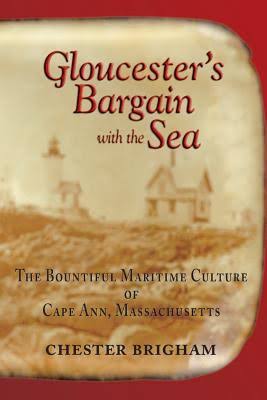
Gloucester has throughout four centuries cast its lot with the North Atlantic, remaining a maritime port for better or worse. The maritime culture of Cape Ann is the mix of a noble maritime heritage; ubiquitous sea influences that reach as far as the quarries behind Rockport and into the haunted tracks of Dogtown Common; seductive but capricious natural splendors; and untidy independence that repels some but converts other visitors into lifetime devotees. We plan to invite Chester Brigham, author of Gloucester’s Bargain with the Sea, to join us.  Read this or any other book about the maritime history of Gloucester. [Suggested by Richard Verrengia]

Wednesday, September 28, 2017: The History of History. Read any book about Historiography, or methods of recording history, from Herodotus and Thucydides to Saint Augustine to Ibn Khaldun. You might want to read about ways people have used history as propaganda, or to build up the image of a leader, or focus upon a particular kind of history. [Suggested by Sam Coulbourn]

Wednesday, October 25, 2017: The Industrial Revolution in New England.  Development of mills, the textile industry in Lowell, Lawrence, Manchester and elsewhere. Life in the mills, quality of life in the cities. Advent of the steam engine. Railroads. Banking and commerce in the Industrial age. Labor problems and unionization. Iron and steel production. Coal mining. Communications. [Suggested by Sam Coulbourn]

Wednesday, November 29, 2017: The Decline of Major Powers.  How does it happen, that a nation that has been calling all the shots suddenly finds out that it’s not the Big Cheese any longer? Read about Athens and Sparta, or look at Rome, or the Arab Caliphate, Spain, Great Britain, France, Germany, the Soviet Union. Do we see China coming to take the mace away from the United States of America?  [Suggested by Beverly Verrengia]

No meeting in December

Wednesday, February 28, 2018:  Famous Travelers and Adventurers before the 20th Century—their lives and stories. Marco Polo, Christopher Columbus, Lewis and Clark, Stanley and Livingstone, more. [Suggested by Walt Frederick]

Wednesday, March 28, 2018:  The U.S. Navy in Asia. The Asiatic Squadron. The Yangtze Patrol. Patrolling the Philippine Islands, “China Sailors”, World War II, The Seventh Fleet. [Suggested by Walt Frederick]

Wednesday, April 25, 2018:  A look at the world and times of Jane Austen. Rockport Public Library is celebrating “Austen in April”.  Read about the life of Austen, or focus upon England in the early 1800s, the Royal Navy at that time, the gentle English world Jane lived in. Feel free to read Sense and Sensibility, Pride and Prejudice, Persuasion, or any of her novels to gather a sense of Jane and her world. [Suggested by Christiann Guibeau]


Wednesday, May 30, 2018:  A History of Public Relations. Managing the news, propaganda, image-building. Hitler’s Joseph Goebbels. Ancient persuasive techniques.  [Suggested by Sam Coulbourn]